
Summary
Jacob Bjelfvenstam filmed an interview with a Holocaust survivor in Stockholm for a German television production. The shoot required careful planning of camera, lighting and sound so the testimony was captured clearly and respectfully, and involved coordinating filming across borders with an international production team.
- Client
- German television production
- Role
- Videographer
- Production
- Documentary interview
- Location
- Stockholm, Sweden
- Focus
- Sensitive testimony, respectful documentary approach
- Collaboration
- International production team
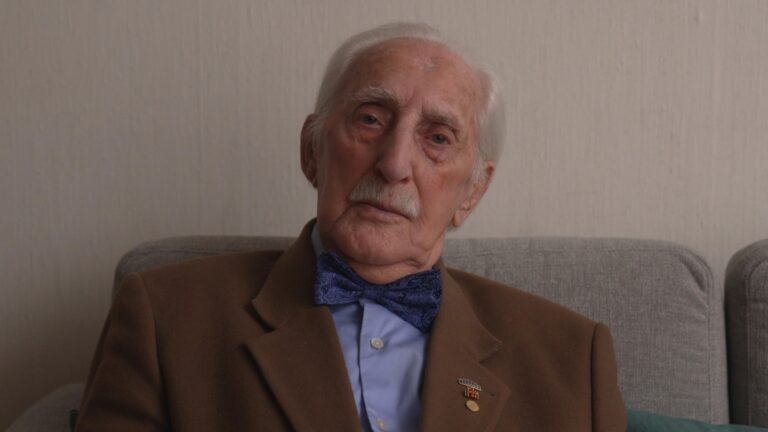
In January 2026 I filmed an interview with Leon Weintraub, one of the last living survivors of Auschwitz, for DW (Deutsche Welle). He was 100 years old. The film, What Happiness Means After Auschwitz: Leon Weintraub at 100, was published on DW History and Culture’s YouTube channel and you can watch it below.
DW flew in a reporter from Berlin, and I was the local crew in Stockholm. We filmed in Leon’s home on Södermalm. I ran two cameras myself and also handled the lighting and the sound.
The story
Leon Weintraub grew up in Łódź and was deported to Auschwitz in the summer of 1944, aged 18, together with his mother and three sisters. His mother was sent to the gas chambers on arrival. In the interview he talks about losing her, about what hunger really feels like, and about what happiness means to him today.
It is one of the most moving interviews I have ever filmed. Despite being 100 years old, Leon was remarkably sharp and easy to work with, and it was a day I will remember for a long time.
Filming an interview in someone’s home
An interview like this happens in a real home, not a studio, so the set-up has to fit the room and the person rather than the other way around. Running two cameras meant I could hold a wide shot and a close-up at the same time, so the conversation never had to stop for a camera change. My priority was light that looks natural in the room and sound clean enough for every word of his testimony to be heard.
Local crew for international broadcasters
This is a typical set-up for me: an international broadcaster sends a reporter or producer, and I provide the camera, lighting and sound on the ground in Stockholm, so they don’t need to fly in a whole team. I have worked this way for DW, the BBC and the European Commission. If you are planning an interview in Stockholm, get in touch.